Introduction to Cognitive-Behavioural Counselling
About Course
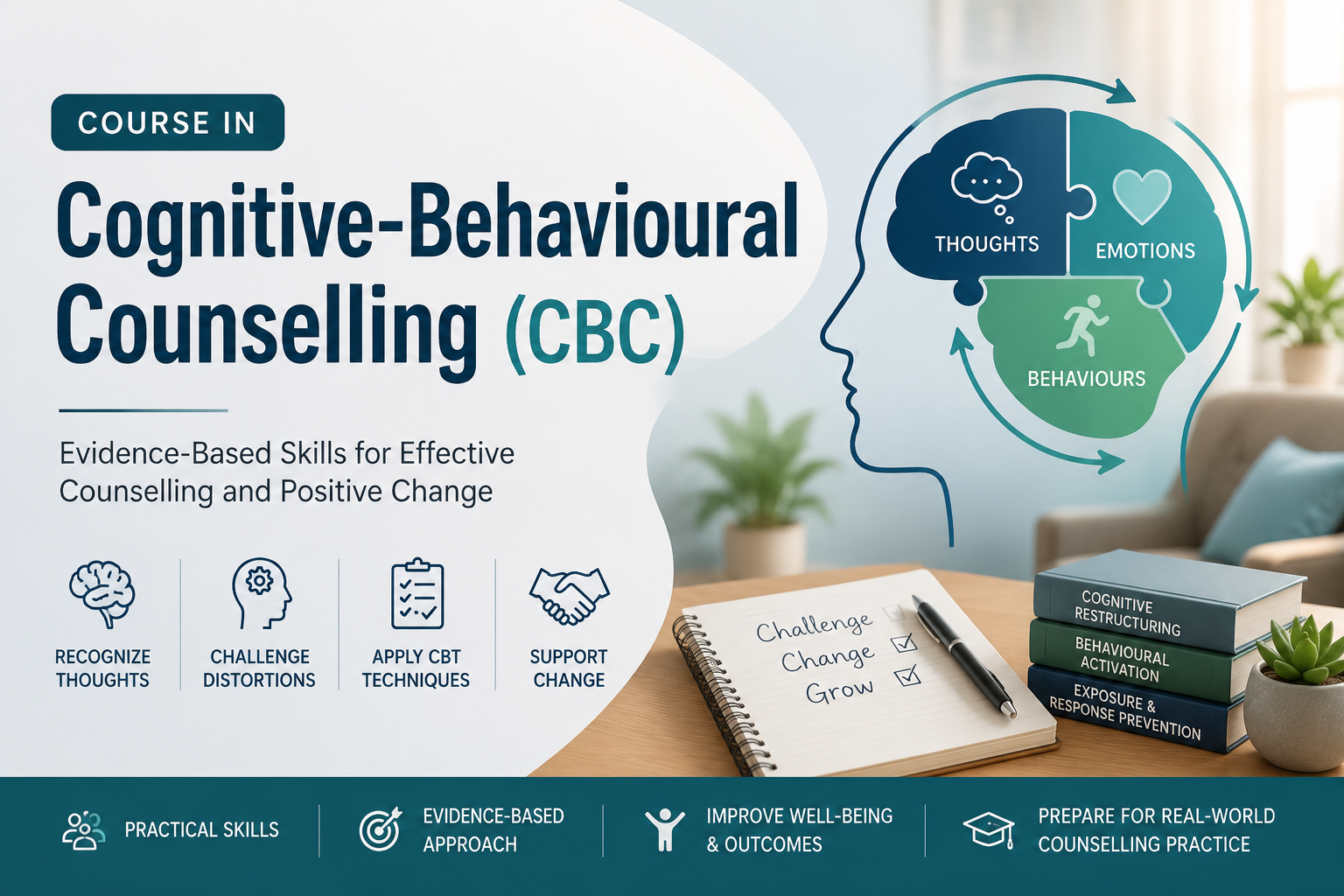
This course introduces the foundational concepts and techniques of Cognitive-Behavioural Counselling (CBC), a widely used, evidence-based approach in the treatment of mental health and addiction issues. Students will explore the cognitive-behavioural model, including how thoughts, emotions, and behaviours interact. Emphasis is placed on identifying cognitive distortions, applying behavioural interventions, and building collaborative therapeutic relationships. Practical skills are developed through case studies and role-play, preparing students to implement basic CBC strategies in counselling settings.
Course Content
Week 1: Foundations of Cognitive-Behavioural Theory
-
Week 1: Foundations of Cognitive-Behavioural Theory
03:46 -
LO1: Define the key principles of Cognitive-Behavioural Theory (CBT).
11:08 -
LO2: Explain the relationship between thoughts, emotions, and behaviors.
11:03 -
LO3: Summarize the historical development and core concepts of CBT.
11:44
Week 2: Understanding the Cognitive Model
Week 3: Identifying Negative Automatic Thoughts and Core Beliefs
Week 4: Techniques for Cognitive Restructuring
QUIZ I
Week 5: Behavioural Activation and Activity Scheduling
Week 6: Exposure Therapy and Response Prevention
Week 7: Working with Emotions in CBT
Week 8: Collaborative Empiricism and the Therapeutic Relationship
QUIZ II
Week 9: CBT for Depression and Anxiety Disorders
Week 10: Final Exam Review
Final Exam
Student Ratings & Reviews

No Review Yet
